
Views: 7 Author: Site Editor Publish Time: 2026-06-29 Origin: Site


Managing a commercial hospitality environment requires an extraordinary level of attention to logistical details that often go unnoticed by the average guest. Among the most critical yet frequently overlooked aspects of daily hotel operations is the efficient movement of linens, towels, and uniforms throughout the property. When facility managers and housekeeping directors begin to evaluate their operational workflows, determining the ideal Laundry Cart Capacity becomes a foundational step in optimizing labor, protecting staff from injury, and ensuring that clean and soiled linens are transported with maximum efficiency. Selecting the right equipment is not merely a matter of buying a bin on wheels; it is a complex decision that impacts every tier of the housekeeping department.
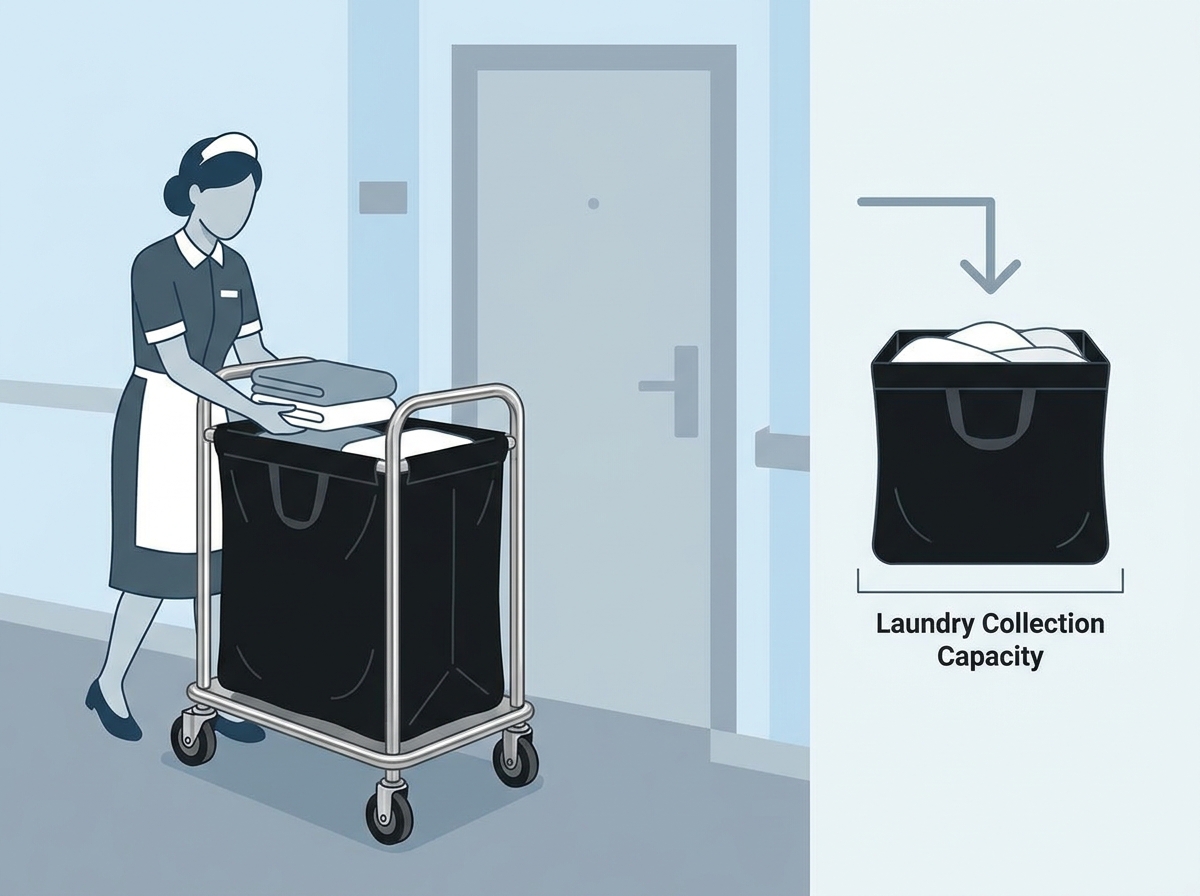
Optimizing your laundry transport systems begins with understanding volume and weight requirements.
The daily volume of laundry generated by a fully occupied hotel is staggering. From heavy terry cloth bath towels and bath mats to high-thread-count bed sheets, duvet covers, and pillowcases, the sheer mass of textiles that must be collected, sorted, washed, dried, folded, and redistributed is immense. If a facility utilizes carts that are too small, housekeeping staff will be forced to make an excessive number of trips to and from the laundry facility or collection chutes, wasting valuable time and reducing overall productivity. Conversely, if the carts are too large, they become cumbersome, difficult to maneuver through narrow corridors, and potentially hazardous if overloaded, leading to ergonomic strain and workplace injuries. Therefore, striking the perfect balance in capacity is essential for maintaining a smooth, safe, and cost-effective operation.
When professionals discuss Laundry Cart Capacity, they are generally referring to two distinct but interrelated measurements: volume and weight. Volume is typically measured in cubic feet or bushels, indicating the physical space available within the cart's basket or bag. Weight capacity, on the other hand, refers to the maximum structural load the cart's frame and casters can safely support without bending, breaking, or becoming impossible to push. Understanding the distinction between these two metrics is vital because the density of laundry can vary dramatically depending on its state. Wet, soiled towels weigh significantly more than dry, clean sheets of the same volume. A cart might have the physical volume to hold a massive pile of wet pool towels, but if its structural weight capacity is insufficient, the frame may buckle under the stress.
In a standard hotel environment, housekeeping managers must calculate their average daily linen usage to determine their capacity needs. A widely accepted industry metric is that a standard hotel room generates between ten and twelve pounds of laundry per day when occupied. For a property with two hundred rooms operating at high occupancy, this translates to over two thousand pounds of laundry that must be moved daily. To handle this volume efficiently, managers must deploy a fleet of carts that can accommodate these heavy loads while remaining agile enough to navigate through guest hallways, service elevators, and tight laundry room aisles without causing damage to walls or doors.
The physical well-being of housekeeping and laundry staff is a paramount concern for any responsible hospitality manager. The repetitive motions involved in bending, lifting, pulling, and pushing heavy loads can lead to severe musculoskeletal disorders if proper ergonomic practices and equipment are not utilized. The capacity of the cart plays a direct role in this ergonomic equation. A cart that is designed to hold an enormous amount of laundry might seem highly efficient on paper, reducing the number of trips required. However, if that fully loaded cart weighs several hundred pounds, the initial force required to push it from a standstill, as well as the force needed to stop it or turn it around a corner, can easily exceed safe limits for an individual worker.
Furthermore, the depth of the cart relative to its capacity is a crucial ergonomic factor. If a cart has a very large volume achieved through excessive depth, workers must bend awkwardly over the edge and reach down to the very bottom to retrieve the last few items. This repetitive bending and lifting from a compromised posture is a leading cause of lower back injuries in the hospitality sector. Therefore, the ideal capacity must be paired with a design that allows for easy loading and unloading, keeping the work within the "safe strike zone" of the employee's body—typically between knee and shoulder height. By carefully calibrating the capacity to match both the volume needs of the hotel and the physical capabilities of the workforce, management can significantly reduce injury rates and associated workers' compensation costs.
To safely support a substantial capacity of heavy, often damp linens, the underlying structure of the cart must be exceptionally robust. The materials used in the construction of the frame dictate not only the maximum weight the cart can bear but also its longevity in a harsh commercial environment. Laundry areas are often humid, and carts are frequently exposed to cleaning chemicals, damp textiles, and the inevitable bumps and collisions that occur during high-speed operations. In such demanding conditions, inferior materials will quickly degrade, rust, or fracture, rendering the cart useless and requiring premature replacement.
For operations that demand durability and a high weight tolerance, a Stainless Steel Laundry Cart is widely considered the gold standard. Stainless steel offers an unparalleled strength-to-weight ratio, allowing the cart to support massive loads without the frame itself being excessively heavy. Specifically, the LAICOZY model 3426100 is constructed from 25mm 201 stainless steel tubing. This 25mm diameter provides a rigid, unyielding skeleton that prevents the cart from flexing or twisting when fully loaded. The 201 stainless steel alloy is specifically chosen for its durability and resistance to the rigors of daily commercial use, while the polished finish ensures that the cart maintains a clean, professional appearance even after years of service in back-of-house areas.
While the theoretical volume of a cart is important, its actual physical dimensions dictate how effectively that capacity can be utilized within the specific architectural constraints of a building. A cart might boast a massive capacity, but if it is too wide to fit through a standard service doorway or too long to easily maneuver inside a service elevator alongside housekeeping staff and other equipment, that capacity is rendered completely useless. Facility managers must meticulously measure their operational bottlenecks—doorways, elevator doors, hallway corners, and storage alcoves—before committing to a specific cart size.
The dimensions of the LAICOZY stainless steel model are carefully engineered to maximize interior volume while maintaining a highly maneuverable footprint. Measuring 940 x 560 x 915 mm, this cart strikes an optimal balance. The 940 mm length provides a wide opening for easily tossing in bulky items like duvets and blankets, while the 560 mm width ensures it can glide smoothly through standard doorways and narrow corridors without scraping against walls or obstructing guest passage. The 915 mm height is particularly noteworthy; it places the top rim of the cart at a comfortable ergonomic level for the average worker, allowing them to load and unload linens without excessive bending or reaching, thereby utilizing the full capacity safely and efficiently.
A cart's capacity is only as useful as its ability to be moved. When a laundry cart is loaded with a hundred pounds or more of soiled linens, the quality, size, and configuration of its wheels become the most critical factors in its operation. Poor quality wheels will flatten under heavy loads, making the cart feel as though it is moving through mud. Bearings can seize up from exposure to moisture and lint, and rigid casters that do not pivot properly can make turning a fully loaded cart a physically exhausting ordeal that slows down the entire housekeeping workflow.
To ensure that maximum capacity can be transported with minimal physical exertion, the wheel system must be robust and intelligently designed. The LAICOZY cart is equipped with four high-quality PPR (Polypropylene Random Copolymer) wheels. PPR is an excellent material for commercial casters because it provides a smooth, quiet ride over various floor surfaces—from carpeted guest hallways to concrete laundry room floors—while being highly resistant to wear, chemicals, and impact. Furthermore, the configuration of these wheels is essential for maneuverability: two are fixed, and two are universal (swivel). The fixed wheels provide straight-line tracking and stability, preventing the cart from drifting sideways on uneven surfaces, while the two universal wheels allow for tight, responsive turning radiuses. This combination ensures that even when the cart is filled to its absolute maximum capacity, a single worker can navigate it safely and precisely through the complex labyrinth of a hotel property.
The frame and wheels provide the structural capacity, but the bag or liner is what actually contains the laundry. The material of the bag must be strong enough to resist tearing when snagged by heavy loads, flexible enough to be easily removed or collapsed when empty, and capable of containing moisture and odors from soiled linens. In many hospitality settings, the visual appearance of the bag is also important, as carts are often visible to guests while being transported through public corridors or service areas adjacent to guest spaces.
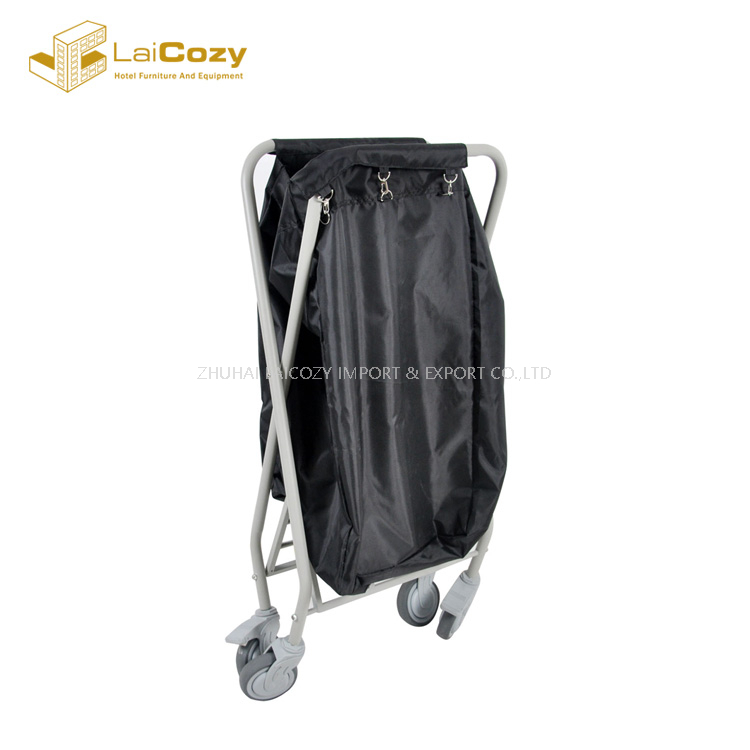
The LAICOZY cart includes a dedicated black nylon bag designed specifically for hotel laundry collection. Nylon is an exceptionally strong synthetic polymer that offers high tensile strength, meaning it can hold a massive capacity of heavy, wet towels without stretching out of shape or tearing at the seams. The black color is a strategic choice for hospitality environments; it effectively conceals stains, moisture marks, and the general unsightliness of soiled linens, maintaining a discreet and professional appearance as the cart is moved through the hotel. Additionally, nylon is relatively lightweight and easy to clean, ensuring that the bag itself does not add unnecessary weight to the overall load and can be maintained in a hygienic condition.
Maximizing the efficiency of your laundry operations requires more than just purchasing carts with adequate capacity; it requires integrating those carts into a comprehensive, well-thought-out workflow. Housekeeping managers must establish clear protocols for how carts are deployed, loaded, transported, and stored. For instance, implementing a sorting system at the point of collection can significantly streamline the downstream washing process. If staff can separate terry cloth towels from flat sheets as they load the carts, the laundry facility can process batches much faster without having to manually sort massive piles of mixed linens.
Training staff on proper loading techniques is also vital for maximizing usable capacity while maintaining safety. Linens should be placed into the cart rather than thrown forcefully, which can create uneven weight distribution and make the cart difficult to steer. Heavy items, such as wet bath mats, should ideally be placed at the bottom of the cart to maintain a low center of gravity, preventing the cart from becoming top-heavy and prone to tipping when navigating corners or uneven thresholds. By establishing these best practices, hotels can ensure they are getting the maximum return on investment from their equipment while protecting their workforce.
When not in active use, laundry carts must be stored efficiently so they do not obstruct service areas or create fire hazards in hallways. The footprint of the cart becomes a critical factor in storage planning. Carts that are too bulky will consume valuable back-of-house real estate. The dimensions of the LAICOZY cart (940 x 560 x 915 mm) allow it to be easily tucked into housekeeping closets or lined up neatly against the walls of the laundry facility without causing major obstructions.
Furthermore, maintaining the carts is essential for preserving their capacity and functionality over time. While the 201 stainless steel frame and PPR wheels are highly durable, regular inspections should be conducted. Maintenance staff should routinely check the wheels for entangled hair or lint, which can bind the bearings and increase rolling resistance. The polished stainless steel frame should be wiped down periodically to remove chemical residues and maintain its professional appearance. The nylon bags should be inspected for tears or fraying seams and washed according to facility protocols to prevent the buildup of bacteria and odors. Proper lifecycle management ensures that the carts continue to operate at peak capacity for years, providing reliable service to the housekeeping department.
Investing in high-quality laundry carts with the appropriate capacity represents a significant upfront capital expenditure for any hotel. However, when analyzed through the lens of total cost of ownership and operational efficiency, the return on investment becomes clear. Carts that are too small result in wasted labor hours as staff make endless trips back and forth. Carts made from cheap materials will break down quickly, requiring constant repairs or replacements. Carts with poor ergonomics will lead to increased employee absenteeism and potential workers' compensation claims.
By selecting a well-engineered solution, facility managers are investing in the long-term efficiency of their operations. A cart that is perfectly sized for the property's corridors, built from durable stainless steel, equipped with smooth-rolling wheels, and fitted with a strong nylon bag will streamline the entire laundry collection process. It allows housekeeping staff to complete their room turnovers faster, reduces physical fatigue, and ensures a steady, manageable flow of linens to the laundry facility. This holistic approach to capacity planning ultimately contributes to a smoother-running hotel and a better experience for the guests, who rely on a constant supply of fresh, clean linens during their stay.
In modern hospitality management, environmental sustainability and strict hygiene protocols are increasingly important. The equipment used to transport linens plays a role in both of these areas. Carts that are difficult to clean or that harbor bacteria in porous materials can become vectors for cross-contamination, which is unacceptable in a post-pandemic hospitality environment. The materials used in the LAICOZY cart address these concerns directly. The polished 201 stainless steel frame is non-porous and can be easily sanitized with standard hospital-grade disinfectants without risking corrosion. The black nylon bag can be removed and laundered, ensuring that the vessel carrying clean or soiled linens remains hygienic.
From an environmental perspective, investing in durable equipment reduces the frequency of replacements, thereby minimizing the waste associated with discarding broken plastic or cheap metal carts into landfills. A high-quality stainless steel cart is designed for longevity, and at the end of its exceptionally long lifecycle, the steel frame is fully recyclable. This aligns with the broader sustainability goals of many modern hotel brands, demonstrating a commitment to responsible procurement and waste reduction.
For mega-resorts, casinos, and massive convention hotels, the logistics of laundry collection scale up exponentially. In these environments, managing Laundry Cart Capacity requires highly synchronized systems, often involving dedicated transport teams, service elevators programmed exclusively for back-of-house logistics, and automated laundry processing facilities. In such high-volume scenarios, standardization of equipment is crucial. Having a uniform fleet of carts ensures that all staff are familiar with the handling characteristics, dimensions, and capacities of the equipment they use daily.
Standardization also simplifies maintenance and storage. When all carts share the exact same dimensions, such as the 940 x 560 x 915 mm footprint of the LAICOZY model, spatial planning for storage alcoves and laundry staging areas becomes mathematically precise. Managers can calculate exactly how many carts can fit into a staging lane and orchestrate the flow of soiled and clean linens with industrial efficiency. The predictable performance of the 25mm stainless steel tubing and the PPR wheels across the entire fleet means that operational bottlenecks caused by equipment failure are virtually eliminated, allowing the massive logistical machine of the large-scale hotel to run without interruption.
Conversely, boutique hotels and properties housed in historic buildings face entirely different challenges regarding cart capacity. These environments often feature narrow, winding corridors, uneven flooring, antique door frames, and small, retrofitted elevators. In these settings, a massive, industrial-sized cart is entirely impractical and could cause significant damage to the property's architecture. Here, the focus shifts to maximizing capacity within a strictly constrained footprint.
The maneuverability provided by the two fixed and two universal PPR wheels becomes the most valuable feature in a historic property. Staff must be able to pivot the cart tightly to navigate sharp corners without scraping the polished finish of the 25mm stainless steel tubing against valuable wall coverings. The 560 mm width is particularly advantageous in these scenarios, allowing the cart to slip through narrow historic doorways while the 940 mm length and 915 mm height still provide enough interior volume in the black nylon bag to make the collection trips efficient. It is in these challenging environments that the precise engineering of the cart's dimensions and wheel configuration truly proves its worth, balancing the need for capacity with the absolute necessity of agility and property protection.
The process of selecting the right equipment for linen transport is a critical operational decision that echoes throughout the entire housekeeping department. It is not merely about finding a container to hold towels; it is about engineering a workflow that is safe, efficient, and reliable. By thoroughly understanding the daily volume of linens, the architectural constraints of the property, and the physical limitations of the workforce, managers can make informed decisions that optimize their operational efficiency and protect their bottom line.
The LAICOZY Stainless Steel Laundry Cart With Black Bag For Hotel (Model 3426100) provides a highly effective solution for commercial hospitality environments. By combining a durable frame made of 25mm 201 stainless steel tubing with a polished finish, four smooth-rolling PPR wheels (two fixed, two universal), and a strong black nylon bag, this cart delivers reliable performance for hotel laundry collection. Its precise dimensions of 940 x 560 x 915 mm offer an excellent balance of substantial interior capacity and necessary maneuverability, while the compact carton size of 960 x 110 x 590 mm ensures efficient shipping and storage prior to assembly, making it a practical, long-lasting asset for any professional housekeeping operation.