Imagine walking into a hotel room and deciding within just ten seconds whether you like it or not. Studies show that nearly 80% of a guest’s first impression is shaped the moment they step inside. But many hotel rooms still struggle with awkward layouts, wasted space, blocked light, and furniture that gets in the way instead of helping guests feel comfortable.
That’s where hotel room furniture layout optimization comes in. It’s the smart, strategic arrangement of furniture to improve comfort, flow, cleaning efficiency, and even the hotel’s revenue. When the layout works, the room feels bigger, brighter, and more enjoyable — and guests notice the difference instantly.
Imagine walking into a hotel room and deciding within just ten seconds whether you like it or not. Studies show that nearly 80% of a guest’s first impression is shaped the moment they step inside. But many hotel rooms still struggle with awkward layouts, wasted space, blocked light, and furniture that gets in the way instead of helping guests feel comfortable.
That’s where hotel room furniture layout optimization comes in. It’s the smart, strategic arrangement of furniture to improve comfort, flow, cleaning efficiency, and even the hotel’s revenue. When the layout works, the room feels bigger, brighter, and more enjoyable — and guests notice the difference instantly.
In this post, we’ll walk through everything you need to know to design a hotel room that feels both comfortable and functional. Here’s what we’ll cover:
What’s Inside This Guide
This guide will help you create hotel rooms that look great, work better, and support professional furniture solutions — including options from Laicozy — to achieve a higher level of comfort and performance.
Why Hotel Room Furniture Layout Optimization Matters?
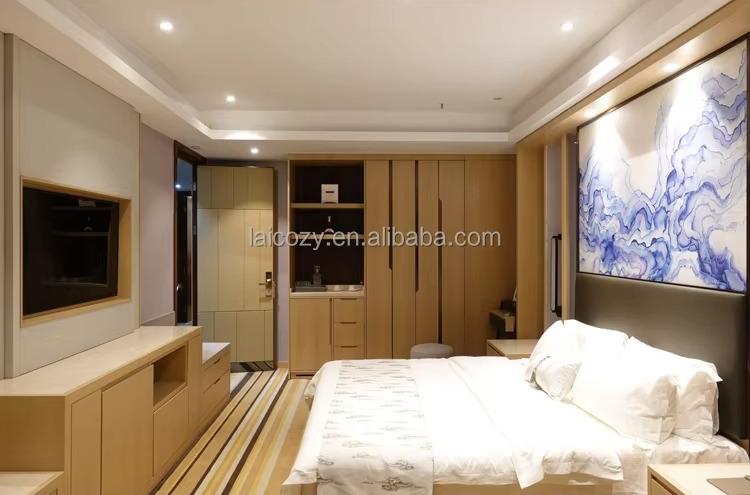
A hotel room isn’t just a space to sleep — it’s a full guest experience. The way furniture is arranged can change how a room feels, how easily guests move around, and even how quickly housekeeping can turn the room over. A well-optimized layout creates comfort, saves time, and boosts your hotel’s overall performance in ways guests may not see but definitely feel.
1. Guest Experience & Comfort
Guests judge a room the moment they walk in. A layout that feels natural and open immediately makes the stay more relaxing.
Why it matters:
The layout shapes sleep quality, especially if the bed placement avoids noise or bright light.
Good flow makes the room feel easier to use — no awkward corners or tight walkways.
Cleanliness feels higher when furniture placement doesn’t trap dust or block light.
According to design tools like RoomSketcher, optimized rooms can feel 20–35% more spacious, even without increasing the actual square footage.
Simple example of good vs poor comfort layout:
| Element | Poor Layout | Optimized Layout |
| Bed placement | Blocks pathway | Clear access on both sides |
| Lighting | Only overhead lights | Layered lighting near bed & desk |
| Walkway | Tight and cluttered | Smooth, open movement path |
A small layout choice can change the entire mood of the room.
2. Operational Efficiency (Housekeeping + Maintenance)
The layout doesn’t just impact guests — it also affects how easily staff can clean and maintain each room.
Key benefits of an optimized layout:
90 cm (36 inches) minimum pathways allow housekeeping to move quickly with tools and linens.
Convenient outlet placement means fewer frustrations for staff and fewer room resets.
Fewer obstructions make vacuuming and wiping down surfaces much faster.
How equipment fits into layout efficiency:
Laicozy transport carts can move smoothly when pathways are wide and furniture is arranged with cleaning routes in mind.
Room-service trolleys can enter and exit without bumping into bulky furniture.
Furniture trolleys make it easier to shift items for deep cleaning or maintenance work.
Operational Flow Example
| Task | Slow Layout | Optimized Layout |
| Changing linens | Bed too close to wall | Equal space on both sides |
| Cleaning floor | Many tight corners | Clear, open walkway |
| Delivering meals | Trolley gets stuck | Path supports easy movement |
A layout that works well for staff cuts turnover time and reduces room downtime.
3. Brand Image & Consistency
Furniture layout is part of your brand story. Whether you run a luxury resort or a boutique hotel, the layout helps shape how people feel about your property.
Why layout influences brand perception:
A consistent room layout across the hotel creates a reliable, professional feel.
Boutique hotels often rely on layout to tell a location-inspired story — like placing the bed to face the city skyline or arranging seating around a view.
Well-placed furniture highlights design choices, making the room look intentional instead of random.
A cohesive layout helps guests instantly recognize and trust your brand.
4. Revenue Impact
A furniture layout may seem like a small detail, but it directly affects your hotel’s bottom line.
How layout influences revenue:
Bad layouts lead to negative reviews about cramped spaces, poor lighting, or awkward room flow.
Optimized layouts improve the overall guest experience, leading to more repeat stays.
Clear, smart layouts boost ratings on platforms like Booking or TripAdvisor.
Rooms that feel bigger and more comfortable can even justify higher nightly rates.
Simple cause-and-effect:
| Layout Quality | Guest Reaction | Revenue Result |
| Poor layout | “Room felt small and uncomfortable.” | Lower ratings, fewer repeat bookings |
| Great layout | “Room felt spacious and easy to use.” | Higher satisfaction, more revenue |
Even small improvements in layout can lead to big gains in both guest happiness and hotel performance.
Core Principles of Hotel Room Furniture Layout Optimization
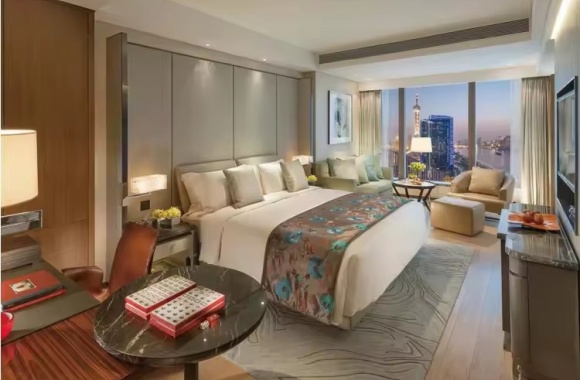
Designing an effective hotel room layout is about more than placing furniture where it fits. It’s about creating a room that feels natural to move through, comfortable to stay in, and visually balanced from the moment a guest walks in. These core principles guide how to shape a room that works for both guests and hotel staff.
Guest Flow / Circulation
Guest flow affects how guests move from one area of the room to another. A well-planned layout reduces frustration and makes the room feel more relaxing and intuitive.
A helpful way to plan this is the “Triangle of Movement”, which connects the three key points guests use most:
Entrance → Bed → Bathroom
When movement between these points is smooth and unobstructed, the entire room feels easier to use.
Key rules for good circulation:
Keep all major pathways open and free of furniture.
Maintain a minimum 36-inch (90 cm) clear path, which also supports ADA-friendly access.
Avoid tight turns or areas where guests have to squeeze past furniture.
Competitor insights (like from SocialTables) emphasize intentional flow — every placement should serve a purpose, not just fill space.
Flow comparison table:
| Movement Area | Poor Circulation | Optimized Circulation |
| Entrance to bed | Narrow path, objects in the way | Straight, open walkway |
| Bed to bathroom | Requires sharp turns | Easy, direct transition |
| Around furniture | Guests bump into corners | Smooth, unobstructed movement |
Good circulation makes the room calmer, safer, and easier to enjoy.
Sightlines & First Impressions
Sightlines shape the emotional impact of a room. Guests make judgments within seconds, and what they see first can set the tone for their entire stay.
Ideal sightlines when entering the room:
A window with natural light
A well-designed headboard or focal wall
A clean, symmetrical arrangement
These elements help the room feel open, welcoming, and thoughtfully designed.
Sightlines to avoid:
A direct view of the toilet
Cluttered corners or exposed storage
The back of a chair or large furniture piece blocking the view
Strategic sightline design is a common technique in high-end hotels and competitor examples. It helps even small rooms feel intentional and upscale.
Zoning Theory (4 Micro-Zones)
A successful hotel room layout divides the space into zones that guide guests naturally through different activities. Competitor insights (including SocialTables and RoomMaster) show that the most efficient rooms follow a four-zone model:
Sleeping Zone
Bed, headboard, nightstands, reading lights
Needs symmetry, clear access on both sides
Living Zone
Lounge chair, small sofa, coffee table
Positioned for relaxation and often near the window
Productivity Zone
Desk, chair, task lighting, outlets
Must support work comfort and easy device charging
Storage / Preparation Zone
Wardrobe, luggage rack, entryway area
Keeps clutter away from the main part of the room
A room with clear zones feels organized and larger, even without more square footage. Zoning also helps staff clean more efficiently because everything has a dedicated place.
Negative Space Optimization (The “Gap Theory”)
Negative space — the empty areas between furniture — plays a major role in how open a hotel room feels. Many hotels try to fill all available space with furniture, but this often makes the room feel cramped and overwhelming.
Why negative space matters:
Creates a cleaner, more relaxing visual environment
Enhances movement flow
Helps small rooms feel significantly larger
Makes it easier for housekeeping to clean edges and corners
Competitor insights show that rooms with intentionally planned negative space are rated as more comfortable and visually appealing.
Do this:
Leave breathable space between major furniture pieces
Use wall-mounted or floating furniture where possible
Avoid oversized items in compact rooms
Avoid this:
Filling every wall with storage or decorative pieces
Placing furniture too close together
Blocking light sources with bulky items
Negative space is one of the simplest yet most powerful tools in layout design.
Balance, Proportion & Scale
Even the best furniture can fail in a room if it doesn’t fit the scale. Balance and proportion ensure that each piece looks right for the room’s size and supports an easy flow.
Key principles:
Match furniture size to room size — larger rooms can handle wider beds and deeper seating, while smaller rooms need slim-profile pieces.
Avoid bulky or heavy-looking items in compact rooms.
Keep furniture heights consistent to maintain visual stability.
Use proportion to avoid crowding — for example, a small room shouldn’t have both a full sofa and a large desk.
Examples of scale done right and wrong:
| Room Size | Good Scale Choice | Poor Scale Choice |
| Small | Compact desk, open closet | Large dresser, oversized wardrobe |
| Medium | Standard bed + lounge chair | Deep, heavy sofas |
| Large Suite | Full-size sofa & table | Tiny furniture that looks “lost” |
When scale is correct, the room feels cohesive, calm, and spacious — no matter its actual size.
Breakdown of Each Key Zone (Placement Rules + Measurements)
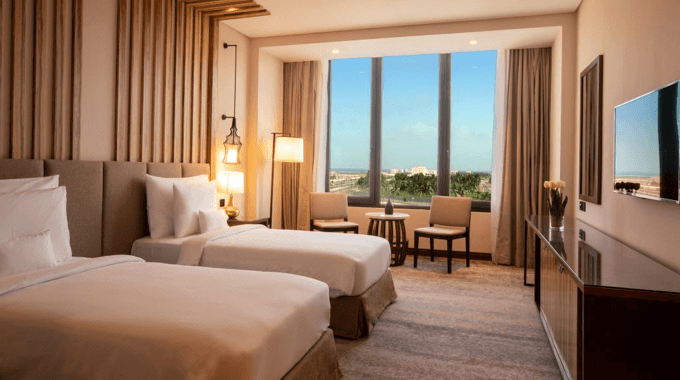
A well-designed hotel room is built around clear functional zones. Each zone has its own purpose, layout rules, and recommended measurements to ensure comfort, flow, and usability. Below is a practical breakdown of how to set up each zone so the entire room feels organized and easy to navigate.
1. Sleeping Zone — The Focal Point
The sleeping zone is the heart of the room. It sets the tone for comfort and is the first place guests look for relaxation.
Bed Placement
The placement of the bed affects the flow, mood, and usability of the whole room.
Best practices:
Place the bed on the longest wall to anchor the space.
Aim for a clear view of the window or open area when guests lie down or walk in.
Avoid placing the bed directly facing the bathroom, which can feel uncomfortable and disrupt the room’s visual flow.
Why this matters:
Competitor insights show that when the bed is positioned well, the room feels more spacious and balanced, even without adding more square footage.
Bedside Tables
Bedside tables help create visual symmetry and practical convenience.
Guidelines:
Use tables on both sides of the bed to create a balanced look.
Keep 60–90 cm of clearance on each side so guests and staff can move comfortably.
Choose compact models for smaller rooms to avoid crowding.
Headboards
Headboards add structure and character to the room.
Best options:
Lighting
Good lighting around the bed boosts comfort and nighttime usability.
Lighting tips:
Use wall sconces to keep bedside tables free.
Opt for warm, dimmable lights to support a relaxing atmosphere.
Place switches and controls within easy reach from the bed.
2. Living & Relaxation Zone
This zone encourages guests to unwind, read, or enjoy a quiet moment. It doesn’t have to be large, but it should feel inviting.
Seating Layout
The seating arrangement depends on room size and goals.
Placement ideas:
Put chairs or a small sofa near windows to take advantage of natural light.
For suites, arrange two seats facing each other with a table between them to create a conversation space.
Angle chairs slightly to avoid a rigid or formal look.
Tables
Tables make the space more functional without overwhelming it.
Recommended options:
Natural Light Optimization
Light makes the living zone feel bigger and more pleasant.
Rules to follow:
Competitor research shows that rooms maximizing natural light gain higher satisfaction scores.
3. Productivity Zone (Workstation)
Many guests expect a space to work, check emails, or write. A thoughtful workstation improves convenience and supports modern traveler needs.
Desk Placement
Placement can make or break productivity.
Best practices:
Set the desk close to natural light for better visibility and comfort.
Ensure all outlets are visible and reachable, not hidden behind furniture.
Leave enough knee and leg room under the desk.
Ergonomic Essentials
Comfort matters, even for short work sessions.
Ideal measurements:
2025 Trend
More hotels are replacing traditional desks with multi-functional tables. These allow guests to work, dine, or relax in the same flexible space — especially useful in compact rooms and lifestyle hotels.
4. Storage / Preparation Zone
The storage area helps keep the room tidy and prevents clutter from spreading into living and sleeping zones.
Entryway Setup
The entryway sets the tone for organization.
Placement tips:
Wardrobe Types
Different wardrobe designs support different room sizes.
| Wardrobe Type | Best For | Benefits |
| Built-in | Modern hotels, large rooms | Clean look, saves space |
| Open-concept closet | Boutique or compact rooms | Feels airy, reduces visual bulk |
| Sliding-door wardrobe | Narrow rooms | Saves clearance space, smooth traffic flow |
These wardrobe types appear often in high-performing competitor designs, especially in rooms under 25 sqm.
Luggage Bench
A luggage bench may seem simple, but it has a big impact.
Why use one:
Prevents guests from placing suitcases on the bed.
Keeps the room more hygienic.
Makes packing and unpacking easier.
Reduces clutter when placed near the wardrobe or entry.
Competitor insights show that rooms with a dedicated luggage area feel cleaner and more organized.
The Science of Layout — Ergonomics, Measurements & ADA Compliance
A hotel room layout may look simple, but behind every placement is a set of measurements and ergonomic rules designed to make the space easy, safe, and comfortable to use. These guidelines help ensure that guests of all ages and abilities can move around freely, reach important items, and enjoy the room without straining or feeling cramped. Competitor insights also show that hotels with strong ergonomic design receive higher comfort ratings and fewer complaints.
Walkways
Walkways play a huge role in how open and accessible a room feels. When they’re too narrow, guests bump into furniture, staff struggle to clean, and the room feels smaller than it is.
Key walkway standards:
Minimum clear width: 90 cm (36 inches)
ADA wheelchair turning circle: 60 inches, which allows full rotation without hitting furniture.
A helpful way to visualize this:
| Area | Minimum Space Needed | Why It Matters |
| Main pathway | 90 cm | Comfortable movement for all guests |
| Area near bed | 60–90 cm | Easier housekeeping and safe access |
| ADA turning zone | 60-inch circle | Supports wheelchair users |
These measurements aren’t just rules — they’re what make the room feel easy to move through.
TV Distances
The distance between the bed and the TV affects comfort and eye strain. Too close feels overwhelming, and too far makes content hard to see.
Recommended Bed-to-TV distance:
150–200 cm
Competitor layouts often angle the TV slightly toward the bed to improve visibility without taking up more space. Mounting the TV on the wall also frees floor space and improves walkway width.
Outlet Reach
Guests expect power access everywhere — especially at the desk and bedside. Outlets that are hidden behind furniture or too low to reach can lead to frustration and poor reviews.
Placement guidelines:
Desk outlets: within 60 cm of the work area
Bedside outlets: must be visible, reachable, and not blocked by lamps or tables
Design trends show that hotels with integrated charging ports (USB-A, USB-C, wireless pads) score higher in convenience. Keeping outlets accessible also helps housekeeping avoid constantly rearranging cords and devices.
Furniture Heights
Furniture that’s too high or too low creates visual imbalance and discomfort. Proper height guidelines make the room feel more natural and user-friendly.
Standard height recommendations:
Wardrobe handles: 90–120 cm
Nightstands: Same height as the mattress or within a 5 cm range
Desk height: ~75 cm (from earlier section)
Luggage bench height: similar to seat height for easy lifting
These measurements help guests use furniture without bending awkwardly or reaching too high.
Lighting Layers
Lighting does much more than brighten the space — it shapes the room’s mood, controls how large it feels, and supports different activities. A single overhead light is never enough for a comfortable hotel room.
A good lighting plan includes three layers:
Ambient Lighting
Task Lighting
Focused lighting for reading, working, grooming
Examples: reading lamps, desk lights, mirror lights
Accent Lighting
Creates atmosphere and visual interest
Can highlight artwork, headboards, or architectural features
Competitor insights from Newton Collective show that light zoning — placing different types of lighting in different room zones — helps control mood and makes the room feel more high-end. This approach also helps smaller rooms appear brighter and more open.
A simple lighting comparison:
| Lighting Type | Purpose | Example |
| Ambient | Overall room visibility | Ceiling lights |
| Task | Activity-focused | Desk lamp, bedside reading light |
| Accent | Mood & aesthetics | LED strips behind headboard |
Thoughtful lighting design can elevate even a basic room into a warm, modern, and guest-friendly space.
Choosing Furniture That Supports an Optimized Layout
The right furniture is essential for creating a hotel room that feels open, easy to use, and comfortable for guests. Good layout design depends heavily on choosing pieces that fit the space, support smooth movement, and match the room’s purpose. Whether the goal is maximizing space in a compact room or elevating style in a luxury suite, furniture selection shapes how well the room performs.
Built-in vs Loose Furniture
Choosing between built-in and loose furniture affects flexibility, space savings, and how “clean” the room looks.
Built-in Furniture
Built-in pieces attach to the wall or structure and are commonly used in modern hotels.
Benefits:
Saves floor space and gives the room a more spacious feel
No “furniture drift,” which means the room stays tidy
Creates a sleek, minimalist look found in many high-end competitor examples
Built-ins are ideal for headboards, wall-mounted desks, wardrobes, or entertainment units. They also reduce visual clutter — something that greatly improves guest first impressions.
Loose Furniture
Loose furniture is movable, allowing for flexibility and design variety.
Benefits:
Easy to replace, update, or rearrange
Adds style through textures, curves, and accent pieces
Perfect for boutique hotels that want unique character
Loose furniture works well for chairs, small tables, and decorative elements.
Comparison Table
| Feature | Built-in | Loose |
| Space-saving | ★★★★★ | ★★★☆☆ |
| Flexibility | ★★☆☆☆ | ★★★★★ |
| Cleaning efficiency | ★★★★★ | ★★★☆☆ |
| Best used for | Beds, wardrobes, desks | Chairs, ottomans, side tables |
Furniture Materials
Hotel rooms experience heavy daily use, so materials must be durable and easy to maintain. Competitor analysis shows that the most successful hotel rooms use a mix of high-performance materials.
Recommended options:
High-Traffic Laminate
Wood Veneer
Warm and natural appearance
More affordable than solid wood
Good for premium-looking headboards and wall panels
Solid Wood
High durability and a luxury feel
Popular in upscale and boutique hotels
Often used for signature furniture pieces
Upholstery Durability (Martindale Rating)
Measures how many rub cycles a fabric can withstand
Hotels should look for 30,000 rubs or higher
Important for chairs, benches, and soft seating
Well-chosen materials extend the life of the furniture and improve the guest experience.
Why Laicozy Furniture Improves Layout Optimization
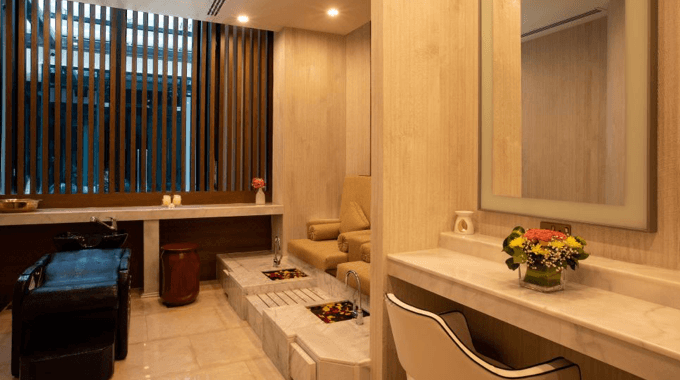
Laicozy provides professional hotel furniture designed specifically for commercial use. These products support room layout optimization by combining functionality, durability, and modern style.
Here are layout-supporting advantages from the Laicozy Hotel Furniture Collection:
How Laicozy furniture helps optimize layouts:
Custom-made sizing ensures furniture fits perfectly without wasting corners or blocking pathways.
Ideal for hotels with compact rooms or irregular room shapes.
Commercial-grade materials provide long-term durability and reduced maintenance.
Many pieces use high-pressure laminates, strong hardware, and stain-resistant upholstery — all essential for heavy hotel use.
Modern minimalist design helps rooms feel larger and more organized.
Clean lines and slim profiles reduce visual clutter and support smooth circulation.
Options for both built-in and loose configurations
Built-in headboards, wardrobes, and workstations
Loose chairs, ottomans, luggage benches, side tables
Hotels can mix these pieces to create a balanced room that looks polished and functions well.
Some examples of useful pieces from Laicozy’s offerings:
| Furniture Type | How It Supports Layout |
| Wall-mounted headboards | Save space & create a clean focal wall |
| Compact nightstands | Fit narrow spaces; prevent walkway blockage |
| Lounge chairs with durable upholstery | Add comfort without crowding |
| Open-style wardrobes | Reduce visual bulk & improve airflow |
These design-focused furniture choices help optimize any room layout.
Operational Layout Optimization — For Housekeeping & Room Service
Room layout isn’t just about guest comfort — it also needs to support the daily operations of housekeeping and room service teams. When furniture is placed correctly and the right equipment is used, cleaning becomes faster, room turnover improves, and staff can work more efficiently.
Housekeeping Pathways
For housekeeping, clear pathways are crucial. If the furniture is too close together, staff struggle to move carts, change sheets, and clean floors efficiently.
Key needs for operational flow:
Pathways must allow service carts and trolleys to enter and turn without hitting furniture.
The bed should have enough clearance on both sides for quick sheet changes.
Storage furniture should be reachable without blocking movement.
Hotels with optimized housekeeping routes report faster turnover times and fewer room setup errors.
Hotel Luggage & Bellman Carts (Lobby Flow & Guest Arrival Experience)
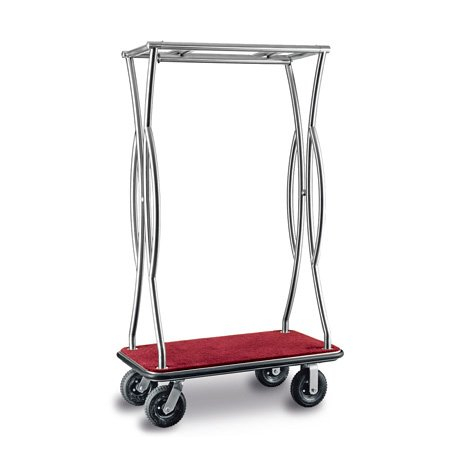
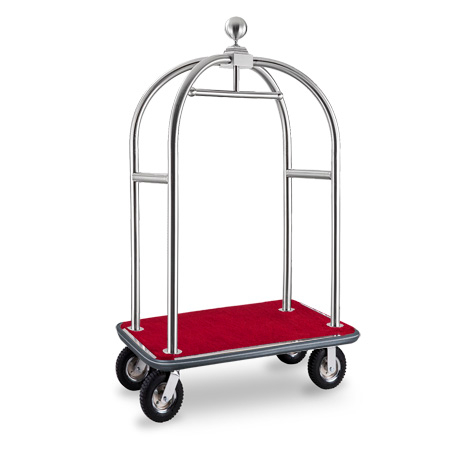
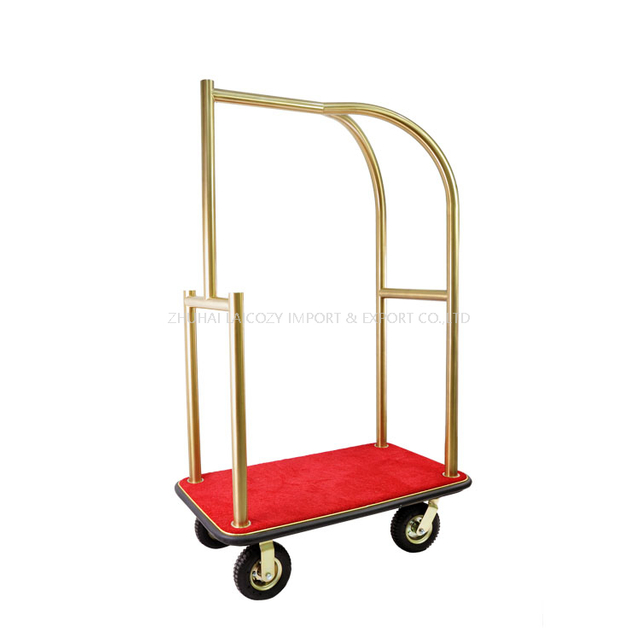
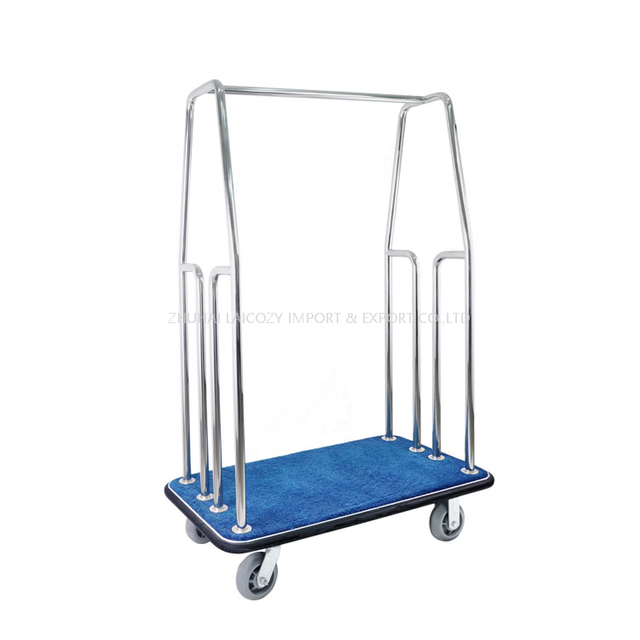
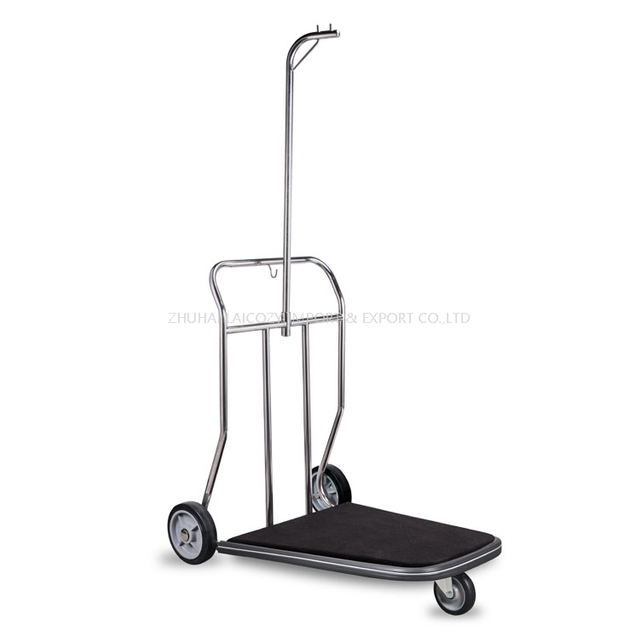
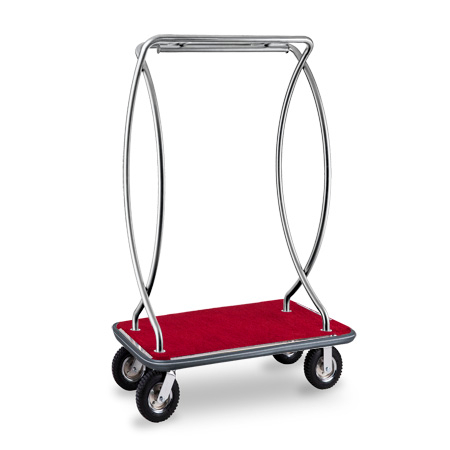
Luggage carts are a key part of the arrival and departure layout in any hotel. They move through the lobby, in and out of elevators, and along guestroom corridors, so their design directly affects circulation paths, turning space, and storage planning. Below, Laicozy’s luggage and bellman carts are grouped by type to show how each supports smoother, safer, and more elegant hotel operations.
1. Classic Stainless Steel Bellman Carts
These carts are designed for everyday use in busy lobbies. They balance durability, capacity, and a clean professional look.
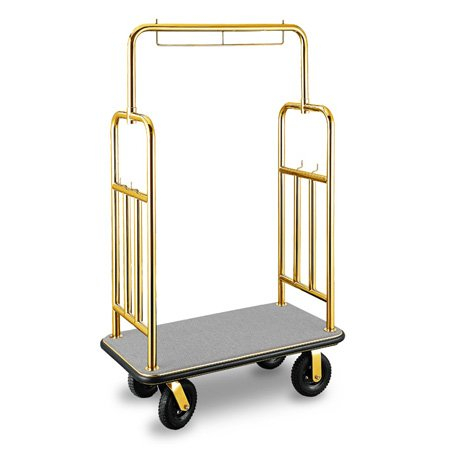
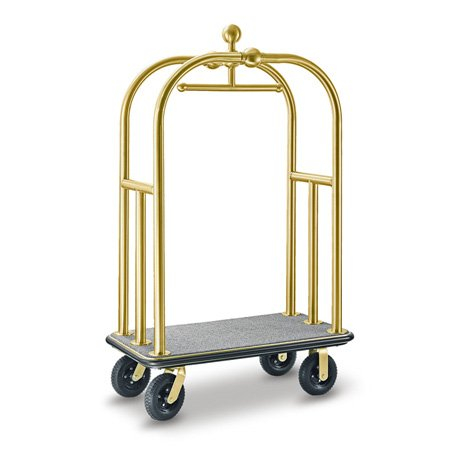
2. Luxury & Golden-Finish Bellman Carts
These carts are suited to upscale and five-star properties, where the lobby layout also serves as a branding statement.
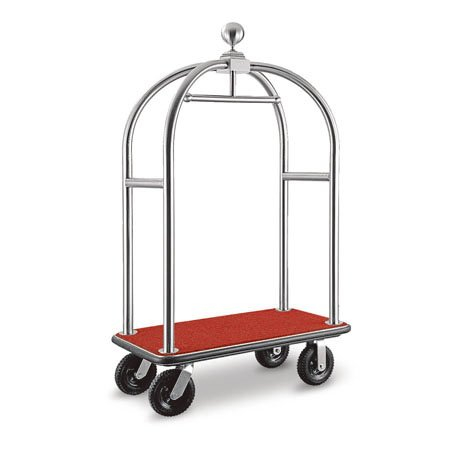
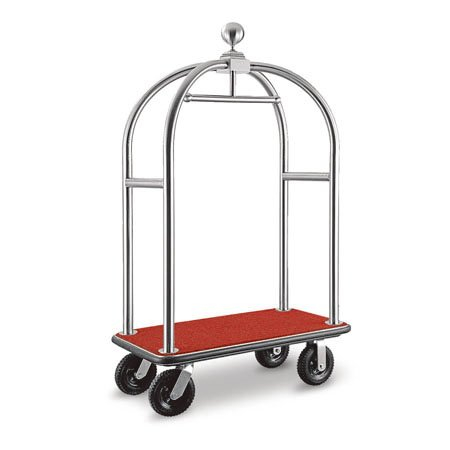
3. Birdcage & Special-Shape Luggage Trolleys
Birdcage designs are iconic in classic hotels and help structure arrival zones visually while adding elegance.
4. Foldable & Space-Saving Luggage Carts
5. Lightweight & Mini Hand Trucks
6. Heavy-Duty Luggage Carts
Using Laicozy Carts to Improve Workflow
Laicozy offers a wide range of professional hotel carts and trolleys designed to support smooth circulation, faster room turnover, and organized back-of-house operations. Instead of just placing carts into the workflow, these tools actually help shape the furniture layout by ensuring pathways stay wide, corners stay accessible, and room service can enter and exit without disruption.
Below is a breakdown of Laicozy cart categories, how they support layout optimization, and examples of products that fit naturally into hotel operations.
1. Room Service Trolleys (Optimized for Guestroom Entry & Smooth Service Flow)
Room service trolleys must glide easily through pathways, fit comfortably beside the bed or seating area, and keep meals stable. These carts directly impact room layout planning because they require clear turning space at the entrance and inside guest rooms.
2. Food & Beverage / Buffet Trolleys (Designed for Dining Areas, Events & Corridors)
These carts are often used in banquet rooms, hallways, or near elevators. They influence layout decisions by requiring enough staging space and smooth access between the kitchen and guest areas.
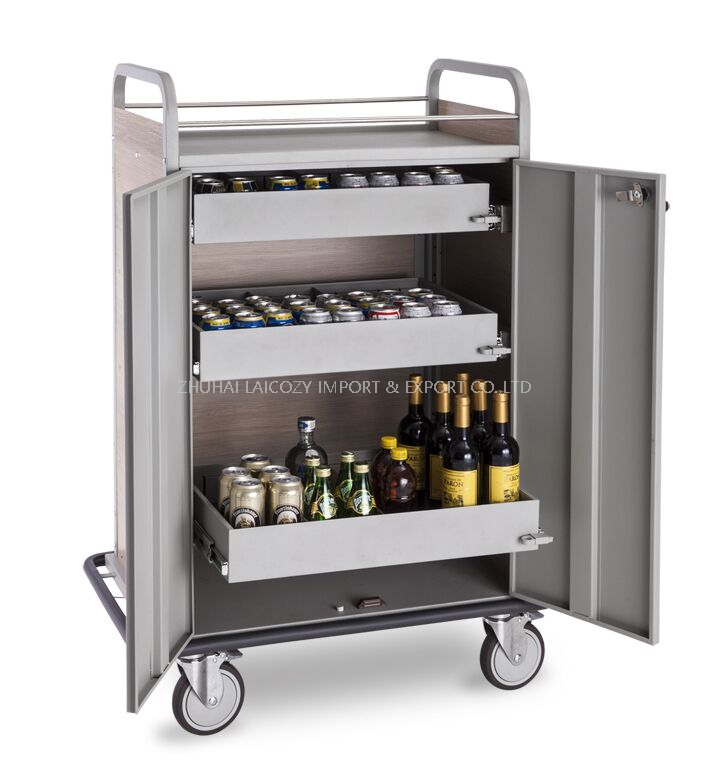
3. Beverage & Restock Carts (Support Housekeeping + F&B Stock Routes)
These carts impact corridor layout planning, especially in hotels with narrow hallways.
4. Banquet & Event Trolleys (For High-Capacity Furniture Transport)
These trolleys are crucial in event-heavy hotels and influence how back-of-house areas are designed.
These products are essential for large event hotels that frequently change room setups.
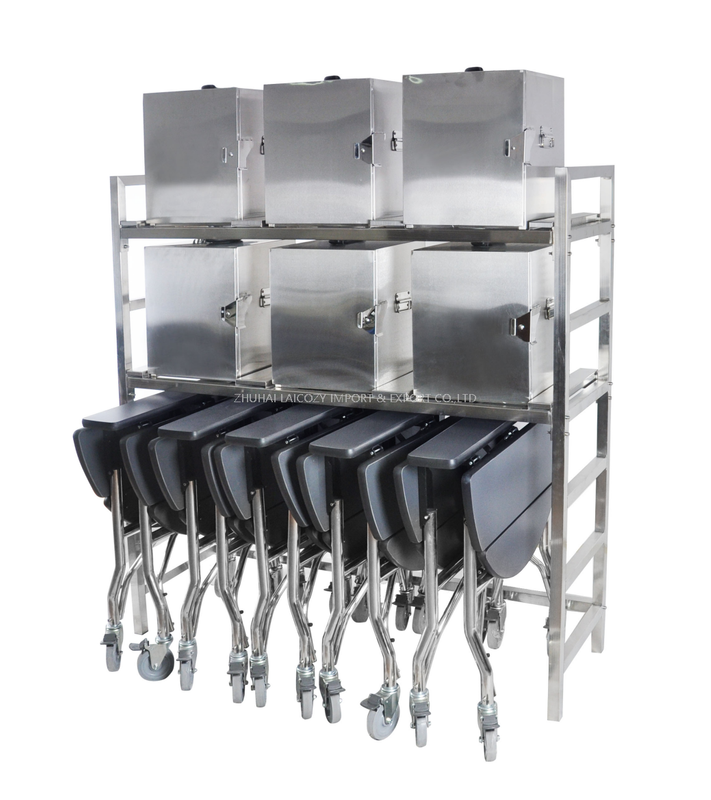
5. Hot Box & Food Transport Carts (Support Kitchen → Guest Room Delivery)
These trolleys ensure safe and fast transport of hot meals, which helps decide corridor width and elevator access routes during hotel layout planning.
Why This Product Integration Matters for Layout Optimization
All these carts influence (and benefit from):
Pathway width planning
Housekeeping flow
Room service delivery speed
Back-of-house storage layout
Corridor traffic patterns
Turnover time efficiency
By choosing professional-grade service carts like those from Laicozy, hotels create a smoother operational layout that keeps rooms looking fresh and services running on time.
Storage & Back-of-House Layout Integration
Operational layout isn’t complete without thinking about how housekeeping and service equipment flow from one room to another.
Key practices:
Reduce distance between supply areas and guest rooms
Place storage furniture so items are accessible without blocking movement
Ensure carts can park near room entrances without disrupting corridors
Hotels that consider back-of-house flow during layout planning achieve smoother operations and higher staff satisfaction.
Hotel Room Layout Types (with Optimization Strategies)
Not all hotel rooms are designed the same way, and each layout type comes with its own challenges and opportunities. Whether a room is compact or spacious, the goal is always the same: create a layout that feels comfortable, intuitive, and functional. Below are the main hotel room layout types and practical strategies to optimize each one.
Standard Rooms
Standard rooms are the most common type in hotels. They usually range from 18–28 sqm and must balance comfort with limited space.
Key Optimization Strategies:
Compact Furniture
Use slim-profile desks, narrow nightstands, and wall-mounted headboards to free floor space.
Choose furniture with built-in storage to reduce clutter.
Essential Zones Only
Even small rooms should include the four micro-zones:
Sleeping
Living (small seating)
Productivity (compact workstation)
Storage
These zones can overlap when space is limited — for example, a seating bench that also works for luggage placement.
Foldable or Space-Saving Furniture
Hotels that use these items make rooms feel more open without compromising function.
Standard Room Layout Snapshot
| Challenge | Solution |
| Narrow walkway | Wall-mounted desk instead of freestanding |
| Limited storage | Lift-up bed with under-storage |
| Small living space | One lounge chair by the window |
Studio / Long-Stay Rooms
Studio rooms are designed for extended stays, so the layout must support daily living and comfort.
Key Optimization Strategies:
Kitchenette Integration
Place the kitchenette along a single wall to avoid breaking the room’s flow.
Use upper shelving to keep counters clear.
Ensure ventilation doesn’t interfere with the sleeping zone.
Multi-Functional Furniture
A dining/work table that serves both purposes.
Sofa beds for flexibility.
Modular shelving that supports cooking, storage, and display.
Competitor examples show that long-stay guests prefer layouts where the living and cooking spaces feel visually connected but not crowded.
Studio Layout Snapshot
| Feature | Optimization Tip |
| Kitchenette | Place near entry to keep food away from sleeping zone |
| Storage | Use vertical cabinets for long-stay needs |
| Workspace | Multi-purpose table with open leg room |
Luxury Suites
Luxury suites offer more floor space, giving designers freedom to create distinct areas and add unique features.
Key Optimization Strategies:
True Zoning Through Furniture
Use sofas, rugs, or shelving to visually separate living, sleeping, and dining spaces.
Keep clear walkways between zones to maintain flow.
Center-Stage Design Elements
High-end hotels often place hero pieces prominently:
These elements can become focal points that enhance the guest experience and make the room feel special.
Suite Layout Snapshot
| Zone | Recommended Feature |
| Sleeping | King-size bed with soft lighting |
| Living | Full-size sofa + coffee table |
| Bath | Statement tub near natural light (if floorplan allows) |
Large spaces should feel connected but purposeful, giving guests room to explore and relax.
ADA Accessible Rooms
Accessible rooms must follow strict design rules to support guests with mobility needs. These layouts focus on open flow, reachable amenities, and safety.
Key Optimization Strategies:
Wider Furniture Spacing
Lower Furniture Heights
Beds should be comfortable to transfer into.
Wardrobe rods, handles, and shelving must be reachable from a seated position.
Full Turning Radiuses
Accessible Layout Snapshot
| ADA Requirement | Layout Application |
| 60-inch turning radius | Open central area of room |
| Reachable storage | Lower hanging bars in wardrobe |
| Path width | No obstructions near bed or desk |
Competitor insights show that hotels with thoughtful ADA layouts receive stronger accessibility ratings and fewer guest complaints.
Small Room Optimization Strategies
Small hotel rooms can still feel comfortable, stylish, and functional — as long as the layout makes smart use of space. Many top-performing hotels use design tricks to make compact rooms feel bigger than they actually are. Below are proven strategies that help small rooms stay open, welcoming, and easy to move through.
Use Verticality
When floor space is limited, the best direction to build is up. Vertical design draws the eye upward, making the room feel taller and more spacious.
Tall Headboards
A tall, slim headboard creates a strong focal point without taking up extra floor space.
It helps give the sleeping area structure, even in narrow rooms.
Hotels often use wall-mounted headboards to save space and improve cleaning efficiency.
Vertical Mirrors
Mirrors instantly make small rooms feel larger by reflecting light and extending sightlines.
A tall mirror near the entrance or beside the bed adds brightness and increases the sense of depth.
Competitor layouts often use vertical mirrors to balance tight areas or brighten darker corners.
How vertical elements affect space perception:
| Vertical Feature | Visual Effect |
| Tall headboard | Makes walls feel taller |
| Floor-to-ceiling mirror | Expands room depth |
| Tall wardrobe doors | Creates symmetry and height |
Multi-Functional Furniture
Every piece of furniture in a small room should do more than one job. This reduces clutter and keeps the layout flexible.
Storage Ottomans
Can be used as seating, footrests, or luggage stands.
Keep extra bedding or personal items hidden inside.
Perfect for compact rooms that need storage solutions without adding visible bulk.
Fold-Down Desks
Great for rooms under 20 sqm.
Can be folded up when not in use to free up walkway space.
Many boutique hotels use wall-mounted desks to keep rooms feeling airy.
Multi-functional pieces let guests enjoy the same amenities as larger rooms, just in a smarter package.
Reduce Visual Bulk
How furniture looks affects how big the room feels. Using lighter, open designs helps create spaciousness without increasing square footage.
Open Closets
Instead of enclosed wardrobes, open closet frames keep the room visually light.
Often used in contemporary and Scandinavian-style hotel rooms.
Easier for housekeeping to inspect quickly without opening doors.
Floating Consoles
Wall-mounted desks or TV consoles save floor space.
Make the room easier to clean.
Keep pathways clear for better circulation.
Glass or Light-Colored Finishes
Glass, acrylic, and lighter tones create a sense of openness.
Light-colored finishes reflect more light, helping the room feel larger.
Competitor insights show that rooms with pale woods or soft neutrals score higher in perceived comfort.
Visual Bulk Comparison
| Furniture Type | Feels Heavy | Feels Light |
| Closed wardrobe | ✔ | — |
| Open closet | — | ✔ |
| Deep wood console | ✔ | — |
| Floating console | — | ✔ |
| Dark finishes | ✔ | — |
| Light finishes | — | ✔ |
Small rooms benefit most from furniture that feels airy and streamlined, keeping the layout uncluttered and enjoyable.
2025 Hotel Room Furniture Layout Trends
Hotel room design is changing quickly as guest expectations evolve and hotels look for ways to balance comfort, function, and modern aesthetics. The trends shaping 2025 focus on cleaner spaces, smarter layouts, and deeper emotional connection. Below are the most important layout trends that will define hotel rooms this year.
Functional Minimalism
In 2025, hotels are moving away from heavy, traditional furniture and choosing sleek pieces that maximize space and simplicity. This trend is driven by guest preferences for uncluttered, easy-to-use rooms.
Key features of functional minimalism:
Removing unnecessary dressers and bulky storage units
Using wall-mounted furniture to free up floor space
Relying on built-in wardrobes and streamlined surfaces
Selecting fewer, but higher-quality furniture pieces
Competitor research shows that minimalist rooms consistently receive higher “cleanliness” and “spaciousness” ratings.
Biophilic Influence
Biophilic design continues to grow as travelers crave calm, nature-inspired spaces. This trend affects both the materials used in furniture and the overall room layout.
Common biophilic elements in 2025:
Natural materials such as wood, rattan, linen, and stone
Soft earth-tone color palettes
Indoor plants or plant-inspired artwork
Furniture with organic shapes that mimic natural curves
These elements help small rooms feel warmer and more relaxing, which improves guest satisfaction.
Biophilic Materials & Their Effects
| Material | Effect on Room |
| Light woods | Makes room feel airy |
| Rattan / natural fibers | Adds texture and warmth |
| Linen fabrics | Creates softness |
| Stone accents | Feels grounding and stable |
Soft Curved Designs
Sharp corners are giving way to smooth, rounded furniture. Curved shapes not only look modern but also make rooms safer and more welcoming.
Why curves work well:
They soften the visual impact of furniture
Reduce the chance of guests bumping into sharp edges
Improve circulation by creating natural pathways
Add a luxury, boutique feel to hotel rooms
Curved headboards, oval side tables, and rounded sofas are especially popular in 2025 layouts.
Smart Rooms
Technology is becoming a central part of hotel room design. Modern travelers expect convenience and connectivity without the clutter of visible cables or extension cords.
Popular smart-room features include:
Built-in USB-C ports at nightstands and desks
Wireless charging pads integrated into furniture
Smart lighting grouped by layout zones (sleeping, working, living)
Motion sensor lights for entryways and night navigation
Central control panels for lighting, curtains, and temperature
Competitor insights show that guests value simple, intuitive tech rather than complicated systems. In 2025, the best layouts hide the tech but keep it extremely accessible.
Cultural Storytelling
Hotels are increasingly using furniture and layout design to reflect local identity. Instead of generic rooms, guests want to feel a sense of place.
Ways hotels use cultural storytelling through furniture:
Headboards inspired by local landmarks or patterns
Artwork or textiles handmade by regional artisans
Lounge furniture that references local architecture
Wood tones, materials, or shapes inspired by local traditions
This trend is especially strong in boutique hotels and resorts. It elevates the overall experience and helps hotels stand out in competitive markets.
Examples of cultural storytelling elements:
| Region | Design Influence |
| Japan | Low furniture, natural woods, minimalism |
| Mediterranean | Soft curves, white walls, woven textures |
| Middle East | Carved details, warm neutrals, arches |
| Nordic | Clean lines, pale woods, cozy fabrics |
These layout and furniture choices help guests feel connected to the destination from the moment they enter the room.
Common Layout Mistakes to Avoid
Even beautifully designed hotel rooms can feel uncomfortable if the layout has small but impactful mistakes. Many of these issues appear in competitor reviews and guest feedback, and fixing them can instantly improve comfort, flow, and usability. Here are the most common layout mistakes hotels should avoid — and why they matter.
Blocking Natural Light
Natural light makes a room feel larger, brighter, and more welcoming. Blocking a window with a wardrobe, sofa, or TV unit is one of the fastest ways to make a room feel cramped.
Avoid:
Better approach:
Competitor insights show that rooms with unobstructed windows receive higher comfort ratings.
Too Little Clearance Around the Bed
Beds are the central element in hotel rooms, and tight clearance makes the room feel cramped and harder to clean.
Minimum recommended clearance:
60–90 cm on both sides of the bed.
When this space is too narrow:
Wrong TV Height or Distance
Improper TV placement leads to neck strain, poor viewing angles, and uncomfortable lounging.
Guidelines:
Mounting the TV too high or too close is a common layout mistake that affects guest comfort.
Desk With Hidden or Hard-to-Reach Outlets
Guests expect easy access to charging points. When outlets are hidden behind furniture or placed too low, it leads to frustration — a common complaint in competitor reviews.
Avoid:
Better approach:
Oversized Furniture for the Room Dimensions
Large sofas, deep dressers, or heavy wardrobes can quickly overwhelm a small or medium-sized room.
Signs furniture is too large:
Tip: Scale furniture to match room size — slim designs work best for compact rooms.
Lack of Zoning (Rooms Feel Cramped)
When the room doesn’t have clear zones, guests may feel like everything is “on top of each other.”
Common signs of poor zoning:
Desk placed too close to the bed
Seating area squeezed against storage areas
No visual separation between sleeping and living zones
Even small rooms benefit from intentional zoning using rugs, lighting, or furniture placement.
Mirrors Reflecting Beds or Clutter
Mirrors can make rooms feel larger — but only when placed correctly.
Avoid mirror placement that reflects:
Ideal placements include near entryways or opposite windows to bounce natural light.
Furniture Legs That Cause Tripping Hazards
Furniture with wide or awkwardly angled legs can create unexpected obstacles, especially in small rooms.
Avoid hazards like:
Coffee tables with extended legs
Lounge chairs with angled metal legs
Low stools hidden in shadows
Competitor insights show that hotels using rounded or recessed-leg furniture reduce accidents and improve overall room flow.
Safer alternatives:
Step-by-Step Guide to Optimizing Your Hotel Room Layout
Optimizing a hotel room layout doesn’t need to feel overwhelming. With the right steps, you can transform any space — big or small — into a room that feels comfortable, efficient, and easy to navigate. Below is a clear, practical process used by many top hotel designers and backed by insights from leading competitor examples.
1. Measure the Room Accurately
Good layout design starts with accurate measurements. Even a few centimeters off can cause furniture to block pathways or limit movement.
Measure key areas:
Total room length and width
Height of ceiling
Window and door placements
Locations of outlets, sprinklers, thermostats
Bathroom entrance clearance
Precise measurement helps avoid costly mistakes during furnishing.
2. Identify Functional Zones
Every hotel room should include four core zones:
Sleeping Zone
Living/Relaxation Zone
Productivity Zone
Storage/Preparation Zone
When you map out these zones early, you create a room with clear purpose and flow. Competitor research shows that rooms with defined zones feel larger and easier to use.
3. Choose Commercial-Grade, Sized-Appropriate Furniture
Furniture should match the room size and support heavy hotel use.
Selection criteria:
Slim-profile pieces for small rooms
Built-in furniture for space saving
Loose furniture for flexibility
Martindale-tested upholstery for durability
Tip: Avoid oversized sofas, deep dressers, or heavy wardrobes that overwhelm the room.
4. Create the First Layout Draft
Sketch your layout on paper or use a digital tool such as RoomSketcher or RoomMaster-inspired floor plans.
Focus on:
Walkway width (minimum 90 cm)
Bed placement on the longest wall
TV visibility from the bed and seating
Clear paths from entrance → bed → bathroom
Think of this draft as your base design before fine-tuning.
5. Optimize Lighting
Lighting changes how big and welcoming a room feels. Good lighting placement also supports each functional zone.
Use three layers:
Ambient: Main room lighting
Task: Desk lamp, bedside reading lights
Accent: Wall sconces, headboard lights
Competitor insights show that using warm, layered lighting makes rooms feel more comfortable and premium.
6. Confirm Housekeeping Workflow Paths
Before finalizing your layout, make sure housekeeping can move easily around the room.
Check for:
Enough clearance on both sides of the bed
Space for carts to enter the room
Accessible surfaces for cleaning
No sharp corners blocking turns
Hotels that optimize for staff flow reduce turnover time and improve room consistency.
7. Test With Real Guests or Staff
Real-world testing is one of the best ways to catch layout issues.
Ask testers to evaluate:
Ease of moving through the room
Ability to reach outlets without moving furniture
Comfort of sitting, working, or relaxing
Lighting at night vs daytime
Noise or privacy concerns related to furniture placement
Even small feedback can lead to meaningful improvements.
8. Adjust & Finalize
Once feedback is gathered, make final adjustments. This may include:
Adding or removing furniture
Changing the angle of the bed or desk
Improving lighting placement
Widening pathways
Adding storage or reducing clutter
This final step ensures your layout is not only functional on paper, but also comfortable and practical in real use.
Real Hotel Layout Case Studies
To see how furniture layout optimization works in real-world situations, here are four practical hotel room case studies. Each example shows how layout strategy, flow, and furniture selection come together to improve functionality and guest comfort. These scenarios reflect common room types found in modern hotels and use Laicozy furniture and carts where appropriate.
Compact City Room (20 sqm)
This type of room is common in major city hotels where space is limited but guest expectations remain high.
Layout
Bed placed on the longest wall with two compact nightstands
Wall-mounted desk facing the window
Open wardrobe with hanging rail and shelf
Single lounge chair near natural light
Floating TV console to free floor space
Flow: Entrance → storage zone → sleeping zone → window seating
Rationale
Small rooms require smart zoning and furniture that feels light. By using vertical storage and floating furniture, the room avoids feeling cramped. Natural light is left unobstructed to make the space look larger.
Recommended Laicozy Furniture / Carts
| Purpose | Laicozy Product |
| Space-saving nightstands | Slim wooden bedside tables from Laicozy Hotel Furniture Collection |
| Compact workstation | Wall-mounted desk from Laicozy’s built-in series |
| Housekeeping efficiency | Lightweight Serving Tray Trolley |
| Quick linen turnover | Transport Cart |
Boutique Hotel Design Example
Boutique hotels focus on personality, local culture, and unique furniture pieces.
Layout
Statement headboard inspired by local artwork
Curved lounge chair and round side table
Open wardrobe with warm wood tones
Accent lighting highlighting textures and art
Multi-purpose table for dining + work
Flow: Entry → artistic focal wall → curved seating → cozy sleeping zone
Rationale
Boutique layouts rely on visual storytelling. Organic shapes and layered lighting help create a memorable atmosphere while maintaining functional flow.
Recommended Laicozy Furniture / Carts
Family Suite Layout
Family suites require more seating, flexible storage, and clear divisions between adult and child spaces.
Layout
Queen bed + twin bed or sofa bed
Defined living area with sectional sofa
Large wardrobe with vertical shelving
Dining/work table shared by the whole family
Child-friendly layout with rounded corners
Flow: Entry → shared dining/work zone → living area → sleeping zones
Rationale
Families need multifunctional spaces that feel organized and safe. Extra seating and storage help reduce clutter while maintaining smooth circulation.
Recommended Laicozy Furniture / Carts
| Purpose | Laicozy Product |
| Large storage solution | Built-in wardrobes from Laicozy Hotel Furniture Collection |
| Safe, rounded seating | Upholstered chairs from Laicozy’s soft seating line |
| Quick delivery for families | Foldable Room Service Trolley |
| Moving extra furniture | Heavy Duty Banquet Chair Cart |
Luxury Suite with Zoned Layout
Luxury suites highlight space, comfort, and strong zoning between living, working, and sleeping areas.
Layout
King bed with high, padded headboard
Full living room with sofa, coffee table, and accent lighting
Dining table that doubles as a workstation
Lounge area near the window with two armchairs
Freestanding bathtub placed as a design feature
Flow: Entry → living zone → dining/work zone → sleeping zone → luxury bath area
Rationale
Luxury suites are designed to feel like upscale apartments. Clear zoning enhances comfort and provides multiple places to sit, relax, work, or dine. Lighting plays a key role in defining each zone.
Recommended Laicozy Furniture / Carts
Hotel Room Furniture Layout Optimization — FAQ
Q: What is the ideal layout for a hotel room?
A: The best hotel room layout follows a clear “flow”: Entrance → Storage Zone → Sleeping Zone → Living Zone → Window.
The bed should sit on the longest wall with 60–90 cm of clearance on both sides. Desks should be placed near natural light, and windows must remain unblocked. The room should contain four micro-zones: sleeping, living, working, and storage. Competitor insights show that rooms with clear zoning feel larger and score higher in guest comfort.
Q: How do hotels maximize small room spaces?
A: Hotels use vertical design, slim furniture, floating desks, and open closets. They avoid bulky dressers and use multi-functional pieces (like storage ottomans or fold-down desks). Light-colored finishes, tall headboards, and vertical mirrors help expand the sense of space. Competitors also emphasize the importance of keeping windows unobstructed to boost perceived size.
Q: What are the ADA requirements for hotel furniture layout?
A: ADA guidelines require:
36-inch (90 cm) minimum clear walkways
60-inch turning radius for wheelchairs
Bed heights and closets within reachable range
Lowered shelving and handles (90–120 cm height)
Accessible outlets beside the bed and at the desk
No obstacles near room entry or bathroom entrance
Accessible rooms must allow free movement between all zones.
Q: How far should a TV be from the bed?
A: The recommended distance is 150–200 cm (per competitor design standards). This prevents neck strain and provides comfortable viewing whether guests are sitting or lying down.
Q: What furniture is essential in a hotel room?
A: The essentials include:
High-performing hotels also add layered lighting (ambient, task, accent) for usability and improved ambiance.
Q: How often should hotel layouts be updated?
A: Most hotels update layouts every 5–7 years, but minor refreshes (lighting, headboards, desk placement) are often done every 2–3 years. Competitor insights show that outdated layouts are a leading cause of negative reviews.
Q: Does custom furniture improve layout efficiency?
A: Yes. Custom furniture eliminates wasted corners, fits tight floorplans perfectly, and improves traffic flow. It also allows hotels to use built-ins that save space and reduce visual clutter. Many modern competitors use custom headboards, wardrobes, and desks to maximize room efficiency.
Q: How do service trolleys help optimize hotel operations?
A: Service trolleys maintain smooth back-of-house and in-room workflows.
For example:
Transport carts speed up linen delivery and reduce hallway congestion.
Furniture trolleys make it easier to reposition beds and seating during cleaning.
Room service trolleys improve food delivery and reduce accidental damage to walls and furniture.
When the layout includes clear pathways (90 cm+), these carts move easily without slowing staff.
Q: How do you improve flow in a hotel room layout?
A: To improve flow:
Keep walkways clear
Place the bed on the longest wall
Avoid blocking windows
Use floating furniture to free floor space
Ensure outlets are visible and reachable
Separate zones with lighting or furniture placement
Competitor sources emphasize that intentional circulation improves guest comfort more than adding extra décor.
Q: What are the four rules in furniture arrangement?
A:
Function first — Every piece must serve a clear purpose.
Balance & proportion — Furniture must match room size.
Flow — Allow smooth movement between zones.
Focus — Create a visual focal point, usually the bed or window.
These rules guide all professional hotel layouts.
Q: What is the biggest mistake in placement of furniture?
A: The most common mistake is blocking natural light with bulky wardrobes or sofas. This instantly makes the room feel smaller, darker, and less welcoming. Competitors repeatedly highlight this as a top issue affecting guest reviews.
Q: Why shouldn’t you put your couch against the wall?
A: Pulling seating slightly away from the wall creates better flow and helps define the living zone. It also prevents furniture from feeling cramped. Even a 5–10 cm gap can improve spatial comfort.
Q: What is the golden triangle in interior design?
A: It’s the design principle that defines efficient movement between three major functional points.
In hotel rooms, the triangle is usually:
Entry → Bed → Bathroom
Keeping this triangle open improves usability and safety.
Q: What is the 80/20 rule in interior design?
A: 80% of a room should be functional, essential furniture; 20% can be decorative. Hotels follow this rule to keep rooms professional, clean, and easy to maintain.
Q: What is the golden ratio for furniture placement?
A: The golden ratio (1:1.618) helps create visual balance. In hotel layouts, it often appears in:
While not strict, it guides harmonious design.
Q: What is the biggest mistake in furniture placement?
A: Oversized furniture in small rooms. It disrupts flow, blocks pathways, and reduces comfort.
Q: What are the 3 F’s of interior design?
A:
Hotels rely heavily on all three.
Conclusion
Optimizing hotel room layouts is about combining smart design, good ergonomics, modern tech, and smooth service flow. When the layout works, guests feel happier, staff work faster, and revenue improves. Now is a great time for hoteliers to review their current rooms, upgrade key furniture pieces, and consider custom-built hotel furnishings and service trolleys from Laicozy to create spaces that truly perform.